
Mudras as a Model of Practice Within Therapeutic Yoga
Exploring Gesture, Awareness, and Intention Through the Pancha Kosha Framework
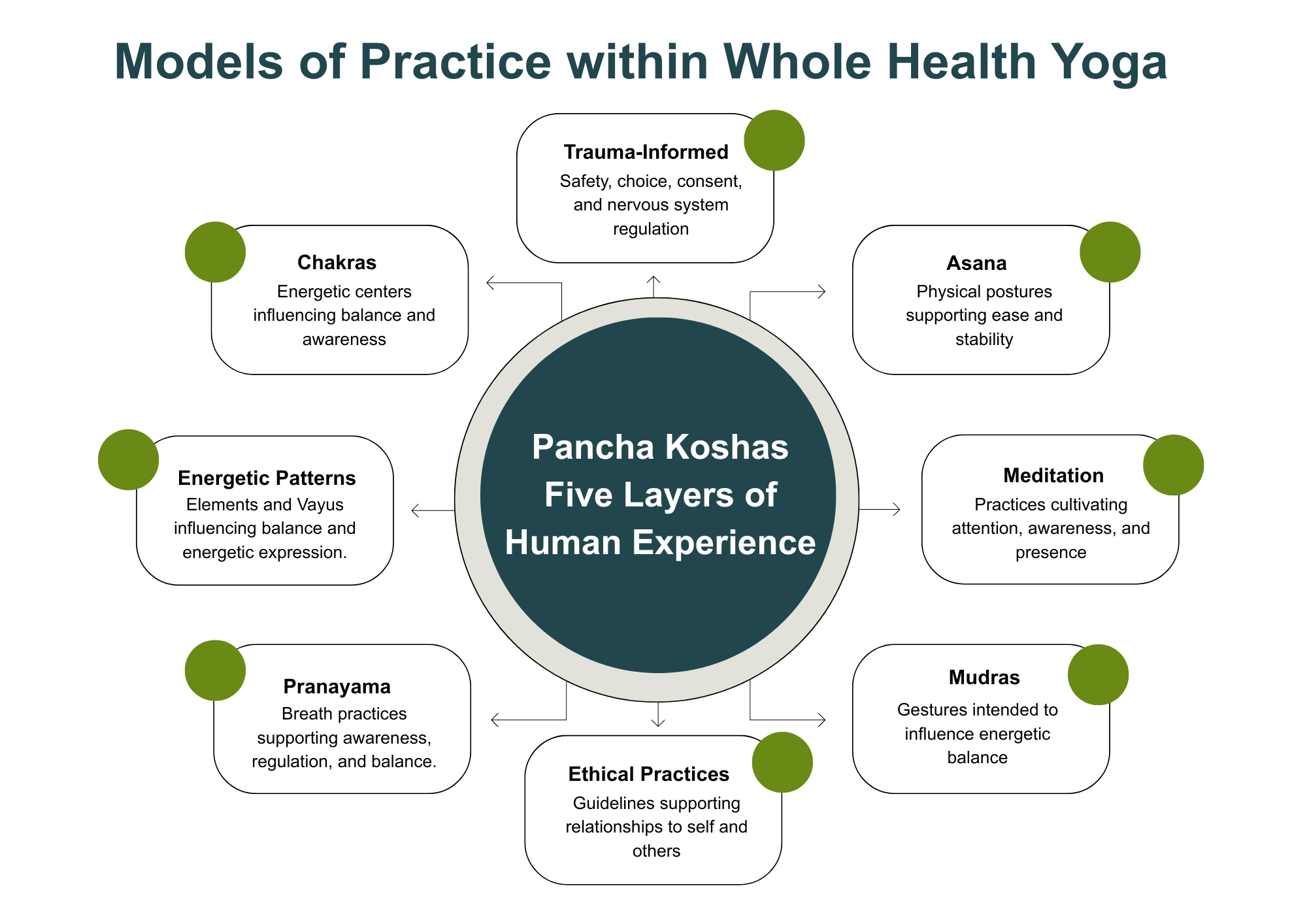
Within Whole Health Yoga’s framework of yoga therapy, the models of practice are not approached as isolated techniques, but rather as interconnected approaches that support whole-person well-being. The Pancha Koshas provide the framework for understanding the many layers of human experience. Previous blogs have explored trauma-informed yoga principles, ethical practices, meditation, pranayama, asana, the chakra system, and the energetic patterns of yoga. Each contributes a different perspective while helping shape an individualized therapeutic approach.
In this blog, I explore how mudras serve as another model of practice within the Pancha Kosha framework. When combined with meditation, breath awareness, mantra, and the other models of practice, mudras become another way to cultivate awareness, intention, and whole-person well-being.
Understanding Mudras
The Sanskrit word mudra is commonly translated as gesture, seal, or attitude.
Although mudras are often recognized as hand positions practiced during yoga or meditation, they represent much more than symbolic gestures. Within yoga philosophy, mudras are intended to influence awareness, attention, and the expression of energy throughout the body and mind.
Within therapeutic yoga, mudras provide another accessible practice that may support nervous system regulation, self-awareness, and intentional living.
My understanding of mudras has been shaped through yoga therapy training at the Kripalu School of Integrative Yoga Therapy and through the work of Joseph and Lilian Le Page, particularly Mudras for Healing and Transformation. Their teachings continue to influence the way I integrate mudras within individualized therapeutic yoga sessions.
The Elements Within the Hands
One reason I find mudras particularly meaningful is their relationship with the five elements.
Within traditional yoga philosophy, each finger corresponds with one of the five elemental qualities.
Thumb — Fire
Index Finger — Air
Middle Finger — Space
Ring Finger — Earth
Little Finger — Water
As different fingers come together through specific mudras, they symbolically cultivate different elemental qualities.
Within Whole Health Yoga, I often integrate this understanding with the elemental assessment process discussed in the previous blog. Mudras become another practical way of intentionally cultivating qualities that may support greater balance throughout the Pancha Koshas.
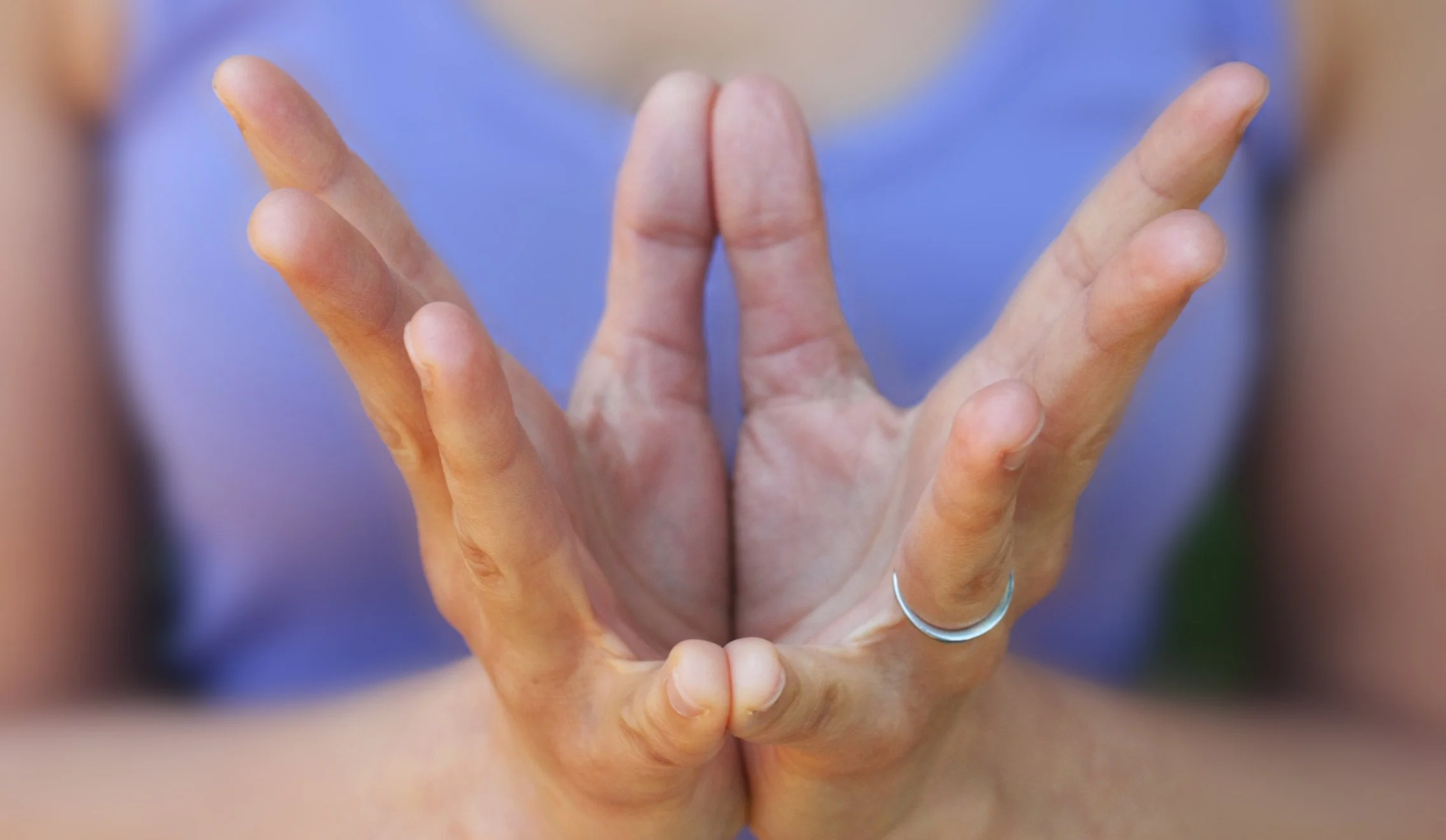
The position of the hands may be simple, but the awareness, breath, and purpose brought to the practice are what often create the greatest therapeutic value.
More Than a Hand Gesture
Over the years, I have found that mudras often become most meaningful when they are practiced with intention rather than perfection. The position of the hands may be simple, but the awareness, breath, and purpose brought to the practice are what often create the greatest therapeutic value.
The hands contain one of the greatest concentrations of sensory receptors in the body and occupy a remarkable amount of space within the brain's sensory and motor cortex.
Simply bringing awareness to the hands changes the way we experience the present moment.
When combined with breath, meditation, movement, and intention, mudras become more than physical gestures. They provide another opportunity to cultivate interoception, strengthen attention, and support nervous system regulation.
Anjali Mudra: A Familiar Beginning
Perhaps the most widely recognized mudra is Anjali Mudra, often called Prayer Hands.
Many people associate this gesture with yoga classes, while others recognize it from prayer and spiritual traditions throughout the world.
Although its cultural expressions vary, the gesture commonly reflects qualities such as gratitude, humility, compassion, connection, and respect.
Within therapeutic yoga, I often introduce Anjali Mudra because it feels familiar and accessible. Rather than focusing on achieving a particular shape with the hands, we explore the intention behind the gesture. Combined with natural breathing, meditation, or a meaningful mantra, this simple mudra becomes an invitation to pause, cultivate awareness, and reconnect with ourselves before responding to the demands of daily life.
A simple mudra becomes an invitation to pause, cultivate awareness,
and reconnect with ourselves before responding to the demands of daily life.
Mudras, Meditation, and Mantra
Within Whole Health Yoga, mudras are rarely practiced independently.
They are most often combined with meditation, breath awareness, mantra, and occasionally gentle movement.
Much of my work begins by helping clients strengthen interoception—the awareness of sensations arising within the body. As awareness develops, clients often become better able to recognize patterns of tension, emotional responses, breathing habits, and the subtle qualities present within their experience.
I frequently pair mudras with guided meditation that encourages this inward awareness while integrating mantras that reflect the qualities we are intentionally cultivating. Rather than simply repeating positive statements, the mantra serves as an intentional focus for attention, supporting new ways of thinking, responding, and relating to ourselves.
Growing research continues to explore the relationship between yoga practices—including meditation, breathwork, and mantra—and their influence on stress physiology, nervous system regulation, and gene expression through the field of epigenetics. While this research continues to evolve, it reinforces the importance of intentional practices that support long-term health and well-being.
Integrating Mudras Into Therapeutic Yoga
Within Whole Health Yoga, mudras are rarely practiced in isolation. They are most often combined with meditation, pranayama, mantra, visualization, and gentle movement to create an individualized therapeutic experience.
A mudra may be selected to cultivate grounding, encourage emotional steadiness, support focused attention, or reinforce the elemental qualities we are intentionally developing through the practice. In this way, the gesture itself becomes less important than the awareness and intention it helps cultivate.
Whether practiced for a few moments during meditation or integrated throughout a therapeutic yoga session, mudras offer another accessible pathway toward greater awareness, self-regulation, and whole-person well-being.
Bringing Mudras Into Practice
Within Whole Health Yoga, mudras are one of several models of practice used within the broader Pancha Kosha framework.
They are not intended to work independently, but rather alongside trauma-informed principles, ethical practices, meditation, pranayama, asana, the chakra system, and the energetic patterns of yoga.
A simple gesture of the hands may appear small, yet when practiced with awareness and intention it becomes part of a much larger therapeutic process. Together, these practices encourage greater awareness, discernment, and intentional choices that support whole-person well-being throughout every season of life.
Continue Exploring These Concepts
Mudras for Healing and Transformation — Joseph and Lilian Le Page
An in-depth exploration of mudras as therapeutic practices that integrate the body, breath, mind, energy, and consciousness. This resource offers practical applications for using mudras within yoga therapy, meditation, and whole-person well-being.
About the Author
Wendy Cook is the founder of Whole Health Yoga (WHY), a therapeutic yoga practice that blends the art and philosophy of yoga with evidence-informed approaches to whole-person well-being. With more than two decades of teaching experience, Wendy has worked in behavioral health settings, corporate environments, athletics, and individualized therapeutic care.
Since 2014, she has trained more than 300 yoga teachers through her Yoga Alliance–registered 200-hour teacher training programs. Her current hybrid training model combines virtual learning, individualized mentoring, and an in-person immersion experience in Guadarrama, Spain. Through this work, Wendy continues to cultivate a supportive teacher community grounded in ongoing education, mentorship, and meaningful connection.
Through Whole Health Yoga, Wendy offers 1:1 and small-group therapeutic yoga sessions designed to support individuals in cultivating greater balance, awareness, and overall well-being.
Ready to take your first step toward therapeutic yoga—or teaching?Explore our 1:1 and small group therapeutic yoga offerings or join our next 200-hour YTT.