
Asana as a Model of Practice Within Therapeutic Yoga
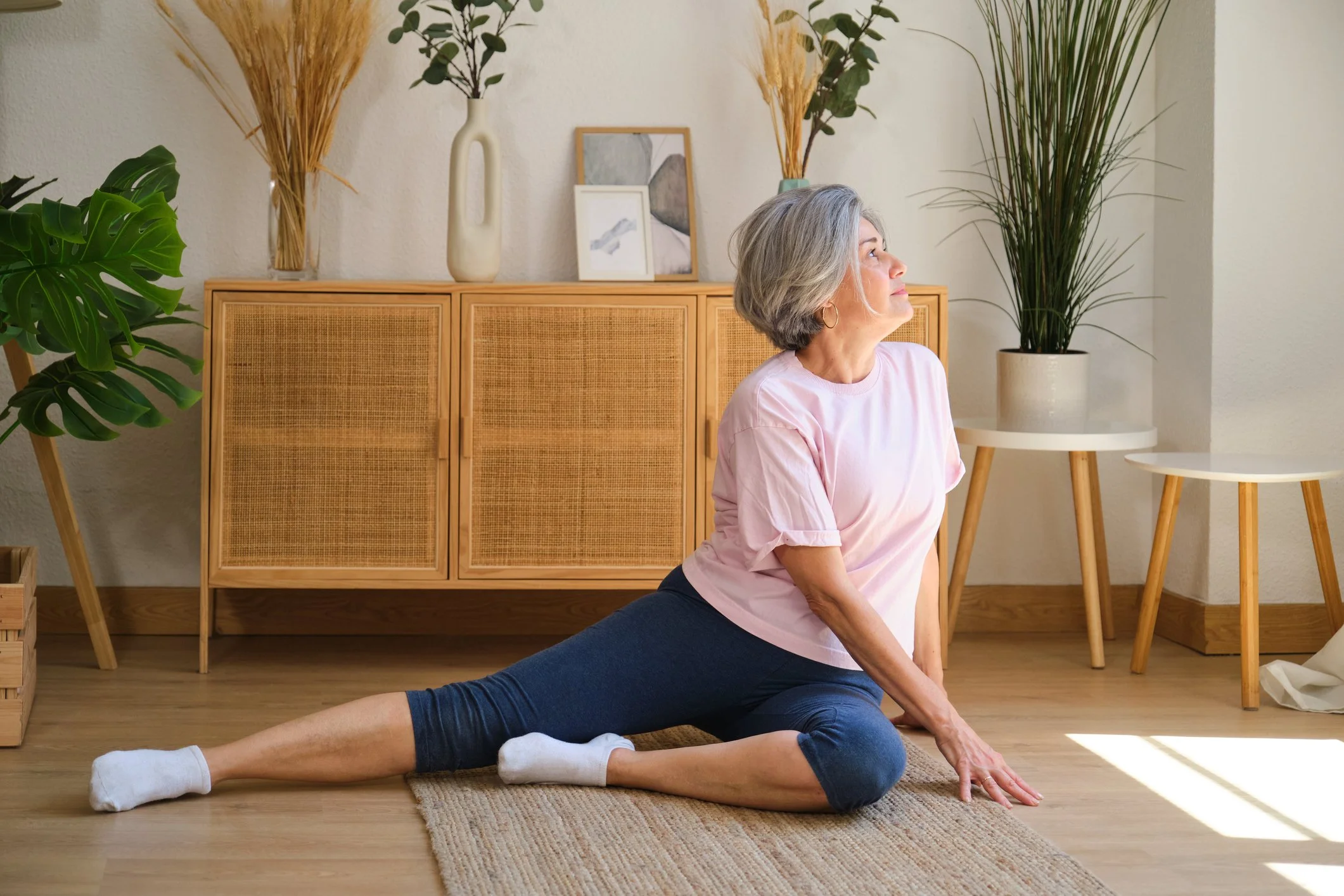
The yoga mat provides a space to experiment with new possibilities.
Exploring Movement, Awareness, and Embodiment
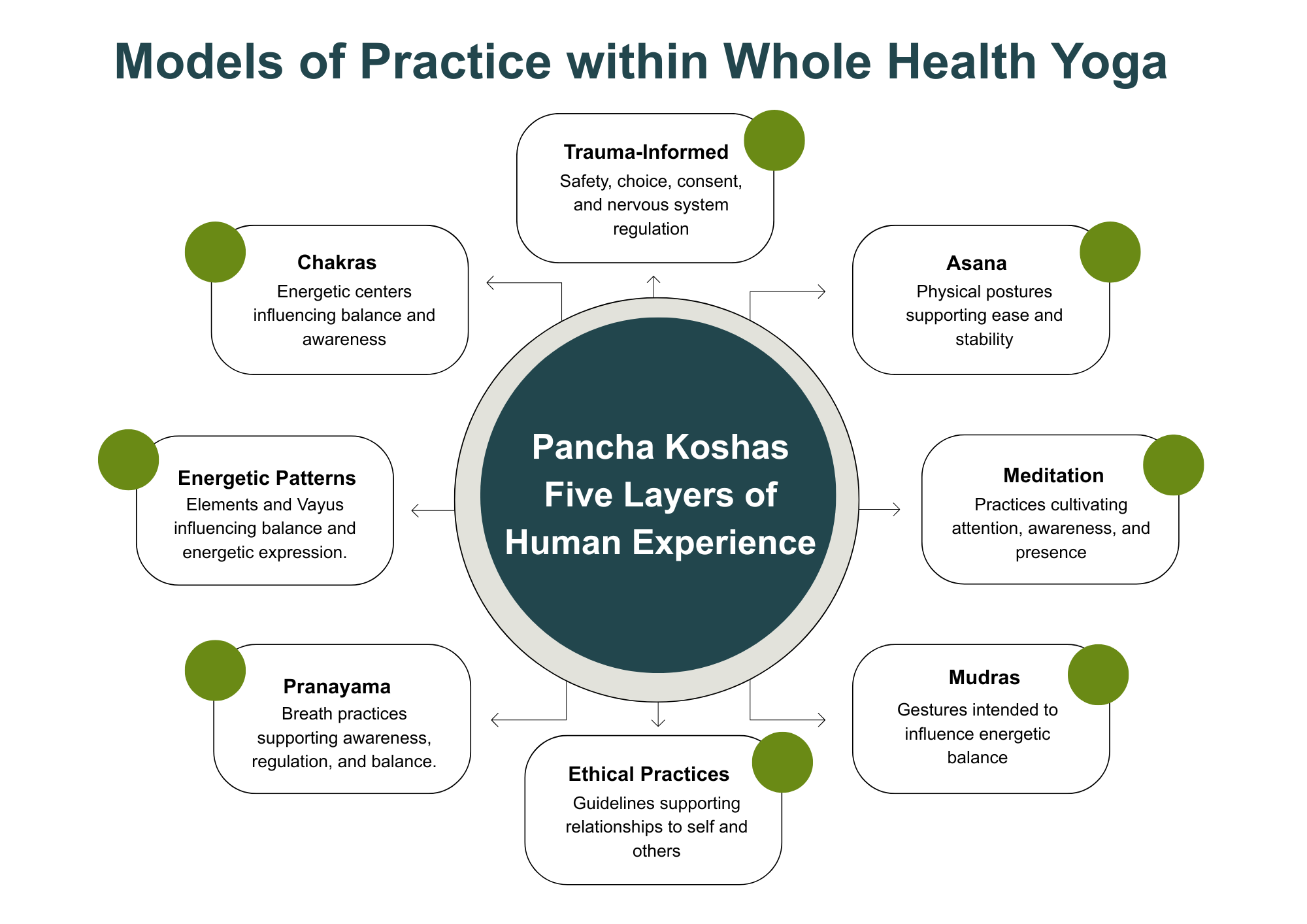
Within Whole Health Yoga, the models of practice are not approached as isolated techniques, but rather as interconnected approaches that support whole-person well-being. The Pancha Koshas provide the framework for understanding the many layers of human experience. As discussed in previous blogs, trauma-informed principles create the relational foundation through which all other models are offered, ethical practices of yoga provide guidance for how they are embodied, meditation cultivates awareness, and pranayama explores the relationship between breath and regulation.
In this blog, I explore how asana serves as another model of practice within Whole Health Yoga, supporting physical health while also creating opportunities to influence the energetic, mental-emotional, wisdom, and deeper layers of human experience.
Asana Is More Than Exercise
When many people think of yoga, they often think of physical postures. While movement is certainly an important aspect of yoga practice, asana serves a broader purpose within therapeutic yoga.
The physical body requires movement to maintain health and function. Every system of the body is influenced by the way we move throughout our lives, including the musculoskeletal, cardiovascular, respiratory, nervous, digestive, lymphatic, and endocrine systems. Asana provides one way to intentionally support physical health while also creating opportunities to explore the relationship between the body, breath, thoughts, emotions, and overall well-being.
Within Whole Health Yoga, movement is valued not only for its physical benefits, but also for its potential to influence the many interconnected layers of human experience.
The Body as a Gateway to the Koshas
The physical body often provides one of the most accessible entry points into therapeutic practice. Through movement, individuals may begin developing greater awareness of sensations, breathing patterns, habits, emotions, thoughts, and reactions.
Within the framework of the Pancha Koshas, the physical body offers access to far more than muscles and joints alone. Changes experienced within the physical body frequently influence energy levels, emotional experiences, mental patterns, personal insight, and overall well-being.
Through the framework of the Pancha Koshas, movement may be understood as influencing not only the physical body, but also the energetic, mental-emotional, wisdom, and deeper layers of human experience.
For this reason, asana is not viewed as separate from the other models of practice. Rather, movement often becomes a pathway through which awareness, breath, energy, and self-understanding can be explored.

Movement becomes an opportunity to observe habits, responses, preferences, and patterns as they arise.
Movement and Personal Growth
My understanding of asana has been influenced not only by years of study and practice, but also by observing the relationship between my experiences on the yoga mat and my experiences in daily life. Through personal practice and reflection on the ethical practices of yoga, I began noticing how familiar patterns of effort, avoidance, tension, patience, curiosity, and self-compassion often appeared both on and off the mat.
Over time, I intentionally explored new ways of responding within my yoga practice and observed how those experiences sometimes influenced the choices I made in daily life. Throughout more than two decades of teaching, I have witnessed similar patterns emerge for many students and clients. These observations continue to shape my understanding of asana as a practice that can support not only physical health, but also personal growth, awareness, and meaningful change.
The ways we move often reflect the ways we approach life.
Some individuals consistently push beyond their limits. Others avoid challenge or become uncomfortable with uncertainty. Some hold tension without realizing it, while others struggle to recognize the signals their body is communicating.
Or, they can step onto their yoga mat with curiosity and a willingness to explore
a different way of moving, breathing, and responding.
These patterns are not problems to fix. Rather, they provide opportunities for awareness.
Within therapeutic yoga, movement becomes more than a physical experience. It becomes an opportunity to observe habits, responses, preferences, and patterns as they arise. Through awareness, individuals may begin exploring new possibilities for how they respond to sensation, challenge, effort, discomfort, and change.
Throughout the years, I have often told students that they can step onto their yoga mat and approach the practice much like they approach their lives. Or, they can step onto their yoga mat with curiosity and a willingness to explore a different way of moving, breathing, and responding.
The yoga mat provides a space to experiment with new possibilities. Through practice, individuals may discover different ways of experiencing sensation, challenge, effort, thoughts, and emotions that can eventually extend beyond the boundaries of the mat itself.
In my experience, it is within this willingness to explore something different through the practice of asana that possibility and transformation often begin to emerge in life.
Asana and Therapeutic Yoga
Through years of teaching therapeutic yoga within behavioral health, healthcare-adjacent, and community settings, I have observed that movement often provides individuals with opportunities to reconnect with themselves in ways that feel tangible and accessible.
Some individuals arrive disconnected from bodily sensations. Others carry patterns of tension, stress, or protective responses that have developed over many years. Through intentional movement, individuals may begin rebuilding awareness, trust, resilience, and connection with their own experience.
Within therapeutic yoga, the goal is not to achieve a particular posture or physical outcome. Rather, movement is approached as an opportunity to cultivate awareness, support health, and explore the relationship between the many layers of human experience.
Bringing Movement Into Practice
Asana is one of many models of practice used within Whole Health Yoga to support balance and well-being. While movement practices may improve physical health, their potential extends beyond the body itself. Through movement, individuals may cultivate awareness, explore familiar patterns, develop resilience, and discover new possibilities for how they respond to themselves, others, and life's experiences.
When approached through the lens of therapeutic yoga, asana becomes more than exercise. It becomes an opportunity to experience the body as a gateway to greater awareness, wisdom, and well-being across the many layers of human experience.
Suggestions to Continue Exploring These Concepts
The Yoga Sutras of Patanjali — Swami Satchidananda
A foundational text of classical yoga philosophy exploring the ethical practices, concentration, meditation, and the cultivation of self-awareness. This translation and commentary offers an accessible introduction to the principles that continue to influence modern yoga practice.
Light on Yoga — B.K.S. Iyengar
Considered one of the most influential modern texts on yoga, Light on Yoga explores the practice of asana while highlighting the relationship between physical postures, breath, concentration, and personal development.
The Heart of Yoga: Developing a Personal Practice — T.K.V. Desikachar
An accessible guide to adapting yoga practices to the individual. Desikachar emphasizes the importance of meeting each person where they are and applying yoga philosophy and practice within the context of daily life.
About the Author
Wendy Cook is the founder of Whole Health Yoga (WHY), a therapeutic yoga practice that blends the art and philosophy of yoga with evidence-informed approaches to whole-person well-being. With more than two decades of teaching experience, Wendy has worked in behavioral health settings, corporate environments, athletics, and individualized therapeutic care.
Since 2014, she has trained more than 300 yoga teachers through her Yoga Alliance–registered 200-hour teacher training programs. Her current hybrid training model combines virtual learning, individualized mentoring, and an in-person immersion experience in Guadarrama, Spain. Through this work, Wendy continues to cultivate a supportive teacher community grounded in ongoing education, mentorship, and meaningful connection.
Through Whole Health Yoga, Wendy offers 1:1 and small-group therapeutic yoga sessions designed to support individuals in cultivating greater balance, awareness, and overall well-being.
Ready to take your first step toward therapeutic yoga—or teaching?
Explore our 1:1 and small group therapeutic yoga offerings or join our next 200-hour YTT.