
Meditation as a Model of Practice Within Therapeutic Yoga
Cultivating Awareness Across the Layers of Human Experience

Meditation may begin with only a few minutes of intentional practice.
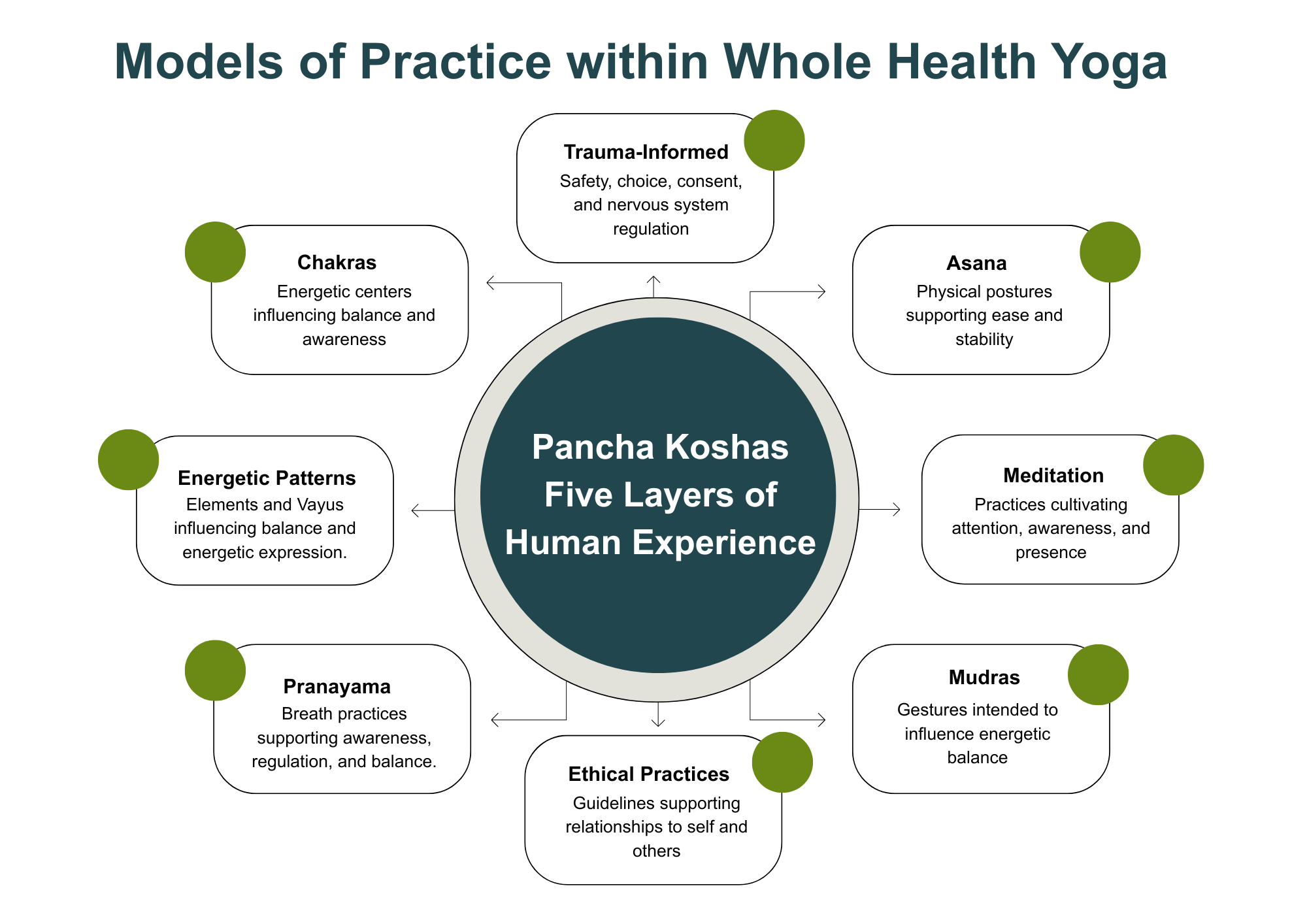
Within Whole Health Yoga, the models of practice are not approached as isolated techniques, but rather as interconnected approaches that support whole-person well-being. The Pancha Koshas provide a framework for understanding the many layers of human experience. Trauma-informed principles create the relational foundation through which practices are offered, while the ethical practices of yoga provide guidance for how those practices are embodied within daily life. Meditation serves as another model of practice that may support greater awareness, balance, and self-understanding across these layers of experience.
Meditation Is Not One Type of Practice
The word meditation is often used as if it describes a single practice. In reality, meditation includes a wide variety of approaches, each utilizing different methods to cultivate awareness, concentration, reflection, and presence. Much like the word yoga may refer to many different styles and practices, meditation encompasses a broad range of experiences and techniques.
While the methods may differ, many forms of meditation share a common intention: creating opportunities to observe one's experience with greater awareness and less reactivity. Through regular practice, meditation may support an individual's ability to recognize thoughts, emotions, sensations, and patterns as they arise, creating space for greater choice and self-understanding.
Meditation practices may also vary in length. While some individuals enjoy longer periods of meditation, meaningful benefits may begin with only a few minutes of intentional practice. For many people, especially those new to meditation or experiencing significant stress, two to five minutes of focused awareness may provide a more accessible and sustainable starting point. As with all therapeutic yoga practices, the goal is not to achieve a specific duration, but rather to create a practice that supports consistency, awareness, and well-being within the realities of daily life.
Meditation and Awareness
Within therapeutic yoga, meditation is not viewed as a practice of eliminating thoughts or achieving a particular state of mind. Rather, meditation is approached as a process of developing awareness.
Awareness is central to many aspects of well-being. Before individuals can make intentional choices, establish healthy boundaries, respond differently to stress, or embody the ethical practices of yoga, they must first become aware of their present experience. Meditation provides one pathway for cultivating this awareness.
This understanding closely aligns with trauma-informed principles. Practices that support awareness can also support an individual's capacity to notice sensations, emotions, thoughts, and nervous system responses with greater curiosity and self-compassion. Rather than forcing change, meditation invites observation and relationship with one's experience.
Meditation Through the Koshas
Within Whole Health Yoga, meditation may be understood through the framework of the Pancha Koshas. Different meditation practices may support awareness within different layers of human experience. This perspective has been influenced by the work of Joseph Le Page and Integrative Yoga Therapy, which emphasizes adapting practices to the unique needs and experiences of the individual.
Some practices begin by directing awareness toward the physical body and sensory experience. Others focus on the breath, energetic awareness, emotional experiences, patterns of thought, personal insight, or deeper qualities of connection and meaning. While these layers are often discussed separately for learning purposes, they remain interconnected aspects of the whole person.
As awareness develops, meditation may support greater understanding of the relationships that exist between the body, breath, thoughts, emotions, behaviors, and overall well-being.
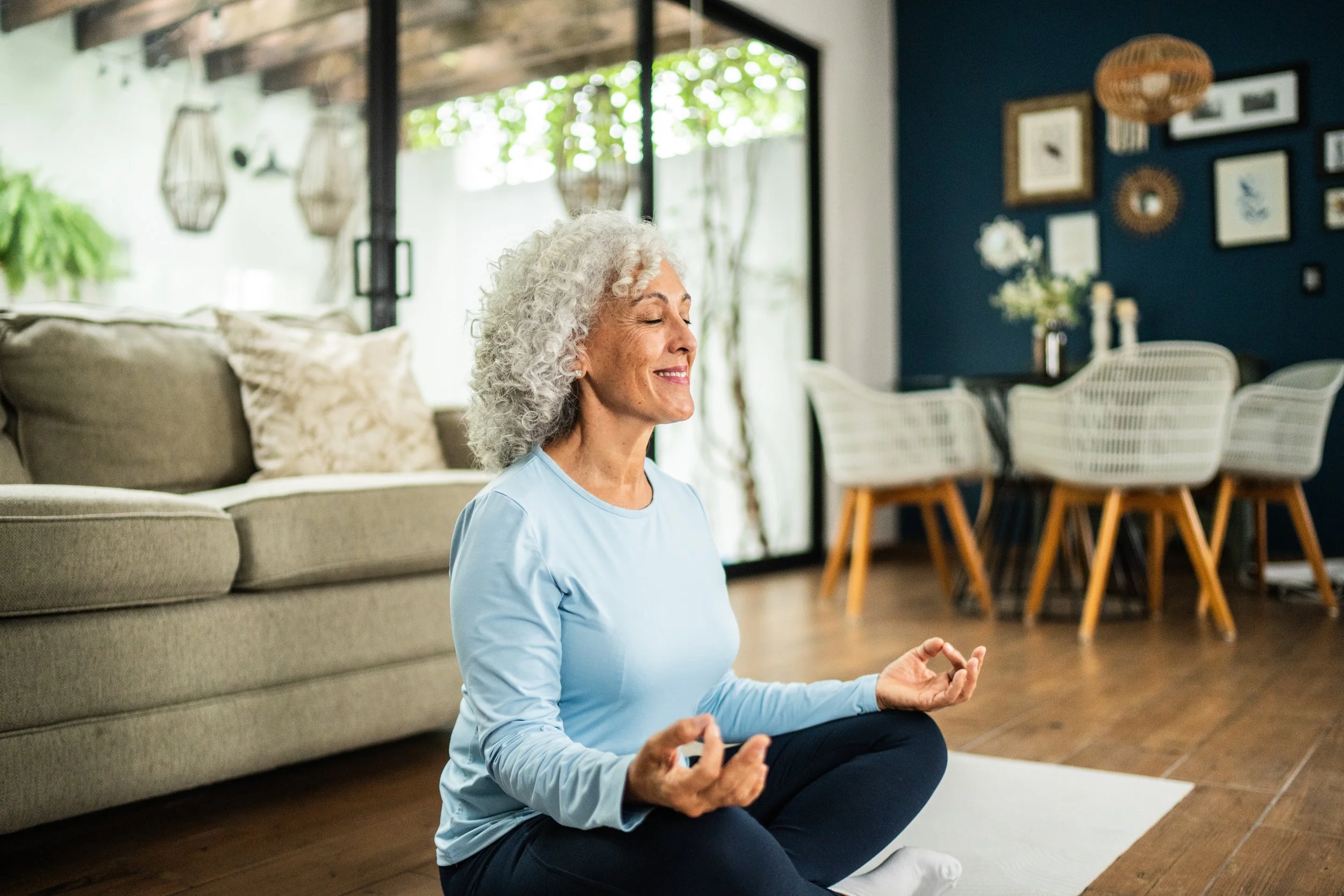
Awareness is central to many aspects of well-being.
Choosing an Appropriate Meditation Practice
Just as movement practices are adapted to the needs of the individual, meditation practices may also be selected based on a person's experiences, current circumstances, capacity for concentration, level of self-awareness, and overall nervous system health.
For some individuals, practices that focus on physical sensations may provide an accessible starting point. Others may benefit from practices involving breath awareness, sound, visualization, prayer, mantra, or symbolic gestures such as mudras. The most appropriate meditation practice is not determined by which method is considered most advanced, but rather by what best supports the individual's current needs and capacity.
This individualized approach reflects the broader philosophy of therapeutic yoga: meeting individuals where they are and creating practices that support safety, choice, and meaningful engagement.
While the experience of meditation may not always feel comfortable, many individuals discover that the benefits of developing awareness gradually outweigh the initial discomfort of beginning the practice.
Meditation and Therapeutic Yoga
Through years of teaching therapeutic yoga within behavioral health and community settings, I have observed that many individuals experiencing prolonged stress, emotional overwhelm, chronic illness, trauma, or significant life transitions often become disconnected from aspects of their internal experience. Meditation may offer a gentle way to begin rebuilding awareness of the body, emotions, thoughts, and inner resources. Over time, this process may support greater self-trust, resilience, and the ability to respond to life experiences with greater intention rather than habit or reactivity.
Despite the growing popularity of meditation, many individuals approach the practice with hesitation. Some worry they will be unable to quiet their thoughts, while others feel uncomfortable sitting still or turning their attention inward. Yet meditation is not measured by the absence of thoughts or the ability to achieve a particular state of mind. Within therapeutic yoga, meditation is approached as an ongoing practice of noticing one's experience with curiosity, compassion, and awareness.
Meditation is one of many models of practice used within Whole Health Yoga to support balance across the many layers of human experience. When integrated with trauma-informed care, ethical practices, movement, breathwork, and the other models of practice, meditation becomes one of many pathways that may support greater self-understanding, meaningful change, and overall well-being. While the experience of meditation may not always feel comfortable, many individuals discover that the benefits of developing awareness gradually outweigh the initial discomfort of beginning the practice.
About the Author
Wendy Cook is the founder of Whole Health Yoga (WHY), a therapeutic yoga practice that blends the art and philosophy of yoga with evidence-informed approaches to whole-person well-being. With more than two decades of teaching experience, Wendy has worked in behavioral health settings, corporate environments, athletics, and individualized therapeutic care.
Since 2014, she has trained more than 300 yoga teachers through her Yoga Alliance–registered 200-hour teacher training programs. Her current hybrid training model combines virtual learning, individualized mentoring, and an in-person immersion experience in Guadarrama, Spain. Through this work, Wendy continues to cultivate a supportive teacher community grounded in ongoing education, mentorship, and meaningful connection.
Through Whole Health Yoga, Wendy offers 1:1 and small-group therapeutic yoga sessions designed to support individuals in cultivating greater balance, awareness, and overall well-being.
Ready to take your first step toward therapeutic yoga—or teaching?Explore our 1:1 and small group therapeutic yoga offerings or join our next 200-hour YTT.