
Chakras as a Model of Practice Within Therapeutic Yoga
Exploring Energy, Awareness, and Whole-Person Health
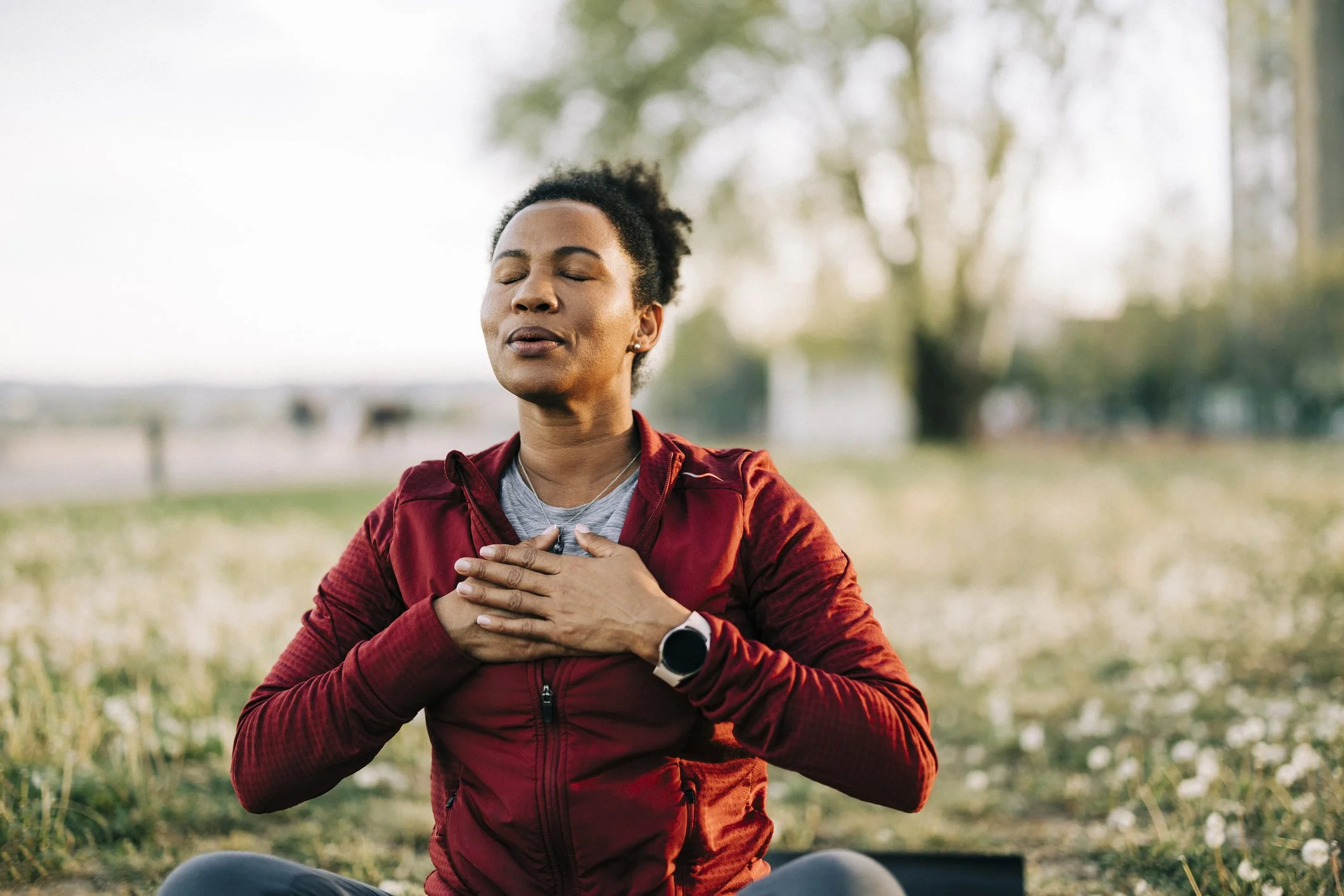
The chakra model provides another lens through which individuals may better understand their experiences.
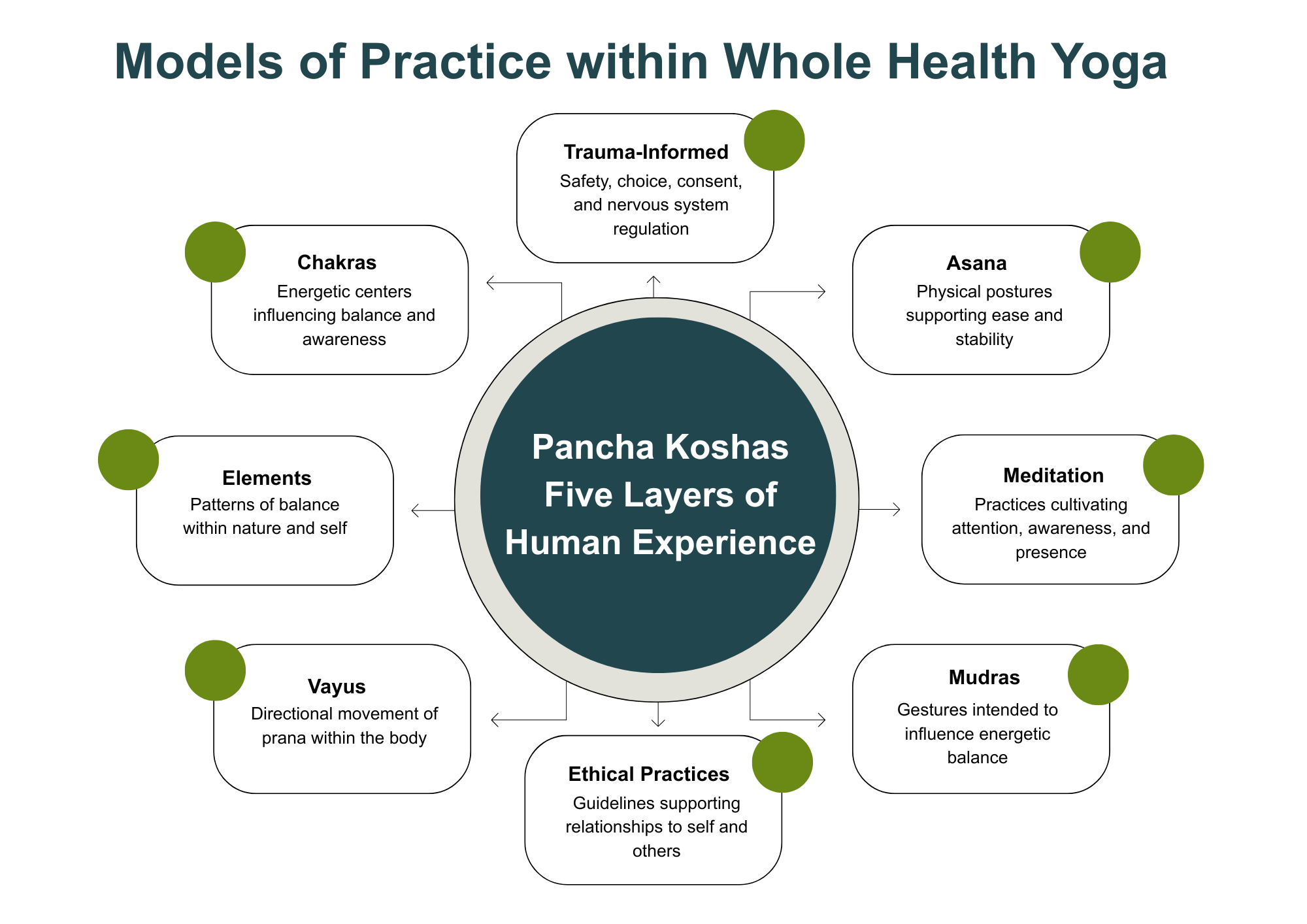
Within Whole Health Yoga, the models of practice are not approached as isolated techniques, but rather as interconnected approaches that support whole-person well-being. The Pancha Koshas provide the framework for understanding the many layers of human experience. As discussed in previous blogs, trauma-informed principles create the relational foundation through which all other models are offered, ethical practices of yoga provide guidance for how they are embodied, meditation cultivates awareness, pranayama explores the relationship between breath and regulation, and asana creates opportunities to cultivate awareness through movement.
In this blog, I explore how the chakra system serves as another model of practice within the broader Pancha Kosha framework, offering a perspective through which individuals may better understand patterns of balance, awareness, personal growth, and whole-person well-being.
Understanding the Chakra Model
The Sanskrit word chakra translates as "wheel" or "disc" and traditionally refers to subtle energetic centers within the body. While the chakras are not physical structures that can be observed through anatomy, they have served for centuries as a model for understanding the relationship between the physical, energetic, mental-emotional, wisdom, and spiritual layers of human experience.
Within therapeutic yoga, the chakra system is not intended to diagnose or explain every aspect of an individual's experience. Rather, it provides another model that may support greater self-awareness and offer insight into recurring patterns that influence health and well-being.
Like the other models of practice discussed throughout this series, the chakra system is approached with curiosity rather than certainty. It is one of many perspectives that may support understanding the whole person.
The Chakras Within the Pancha Kosha Framework
Within Whole Health Yoga, the Pancha Koshas provide the primary framework through which I understand the many layers of human experience. During the assessment process, I first consider which kosha, or combination of koshas, appears to be most relevant to a client's current experience. This helps determine where our work may begin.
The chakra system is then used as one of several models of practice within that broader framework. Rather than assessing the chakras independently, I explore how patterns within the chakra system may be contributing to the experiences observed within the koshas. In this way, the chakra model provides another perspective for understanding how physical, energetic, mental-emotional, wisdom, and spiritual experiences may influence one another.
Each chakra influences all five koshas, just as experiences within each kosha may be reflected through the chakra system. Together, they provide complementary ways of understanding the interconnected nature of human experience.
The relationship also works in the opposite direction. As balance develops within the chakra system through therapeutic practice, corresponding changes may also be experienced within the koshas. Rather than existing as separate concepts, the Pancha Koshas provide the framework while the chakras offer another lens through which those experiences may be explored.
A Perspective Shaped by Tradition and Experience
My understanding of the chakras has been influenced by both traditional yoga philosophy and Carolyn Myss's work in Anatomy of the Spirit. Her writing explores the relationship between our physical lives—including our bodies, relationships, choices, and lived experiences—and our spiritual lives, or our connection with something greater than ourselves. Her work helped me better understand how our relationships, beliefs, life experiences, and spiritual lives are deeply interconnected. That perspective continues to influence the way I integrate the chakra model within the broader Pancha Kosha framework.
The chakra system may also be understood as moving from our most tangible experiences toward progressively subtler aspects of human awareness. The lower chakras often relate more closely to our relationship with the physical world, while the upper chakras invite exploration of meaning, intuition, purpose, and our relationship with something greater than ourselves.
Within Whole Health Yoga, however, these are not viewed as stages that must be mastered in sequence. Healing rarely occurs in a perfectly linear way. Individuals may begin wherever awareness, life circumstances, or intuition suggest is most meaningful.
A Collaborative Assessment Process
When introducing the chakra model, I begin by providing education about each of the seven chakras. After learning about the qualities associated with each one, I invite clients to reflect on which chakra feels most relevant to their current experience. I have found that a client's own intuition frequently identifies the most meaningful place to begin.
Following this collaborative discussion, I assess each chakra as generally underactive, overactive, or functioning within a healthy range of balance. This assessment is then considered alongside the broader Pancha Kosha framework to guide the therapeutic process.
This collaborative process reflects my belief that therapeutic yoga is not something done to a client. Rather, it is a relationship built through education, curiosity, collaboration, and shared decision-making.

I have found that a client's own intuition frequently identifies the most meaningful place to begin.
Education Creates New Possibilities
Lasting change often begins with awareness, but awareness alone is not always enough. We are each limited by what we currently know and understand. As we learn new ways of thinking, moving, breathing, relating, and caring for ourselves, we create opportunities to make different choices.
I see my role as an educator and guide. Rather than telling clients what they should believe or how they should live, I offer evidence-informed practices, yogic philosophy, and opportunities for reflection that support greater discernment. As understanding grows, so does our capacity to make intentional choices that support greater balance and whole-person well-being.
Chakras and Therapeutic Yoga
Like the other models of practice within Whole Health Yoga, the chakra system is not used independently. It often overlaps naturally with meditation, pranayama, asana, mudras, ethical practices, and trauma-informed care. Together, these approaches offer multiple pathways through which individuals may cultivate awareness, balance, resilience, and health.
One individual may benefit from movement practices that cultivate grounding and stability. Another may discover that breath awareness supports emotional regulation, while another finds meditation or self-reflection to be the most meaningful place to begin. The chakra model simply provides another perspective through which these practices may be understood and integrated.
Within Whole Health Yoga, the chakra model provides another lens through which individuals may better understand their experiences. Through education, self-reflection, and intentional practice, it supports greater awareness, discernment, and opportunities to create lasting balance and whole-person well-being.
Bringing the Chakra Model Into Practice
The chakra system is one of several models of practice used within Whole Health Yoga to support whole-person well-being. Rather than providing fixed answers or labels, it offers another opportunity to explore the relationship between the body, energy, thoughts, emotions, relationships, and our connection to something greater than ourselves.
When approached through curiosity, education, collaboration, and personal reflection, the chakra model becomes more than a description of energy centers. It becomes another pathway toward greater awareness, discernment, intentional choice, and whole-person well-being across the many layers of human experience.
Continue Exploring These Concepts
The Yoga Sutras of Patanjali — Swami Satchidananda
A foundational text of classical yoga philosophy exploring the ethical practices, concentration, meditation, and the cultivation of self-awareness. This translation and commentary offers an accessible introduction to principles that continue to influence modern yoga practice and may be experienced through the practice of asana, meditation, and therapeutic yoga.
Anatomy of the Spirit — Carolyn Myss
An exploration of the relationship between energy, health, relationships, personal development, and spirituality. Myss presents the chakra system as a framework for understanding how our life experiences influence whole-person well-being and offers practical insights into the connection between physical and spiritual health.
The Heart of Yoga: Developing a Personal Practice — T.K.V. Desikachar
An accessible guide to adapting yoga to the unique needs of the individual. Desikachar emphasizes that yoga is not a one-size-fits-all practice, but one that is thoughtfully adapted to support each person's physical, emotional, and spiritual well-being—a perspective that continues to influence therapeutic yoga today.
About the Author
Wendy Cook is the founder of Whole Health Yoga (WHY), a therapeutic yoga practice that blends the art and philosophy of yoga with evidence-informed approaches to whole-person well-being. With more than two decades of teaching experience, Wendy has worked in behavioral health settings, corporate environments, athletics, and individualized therapeutic care.
Since 2014, she has trained more than 300 yoga teachers through her Yoga Alliance–registered 200-hour teacher training programs. Her current hybrid training model combines virtual learning, individualized mentoring, and an in-person immersion experience in Guadarrama, Spain. Through this work, Wendy continues to cultivate a supportive teacher community grounded in ongoing education, mentorship, and meaningful connection.
Through Whole Health Yoga, Wendy offers 1:1 and small-group therapeutic yoga sessions designed to support individuals in cultivating greater balance, awareness, and overall well-being.
Ready to take your first step toward therapeutic yoga—or teaching?
Explore our1:1 and small group therapeutic yoga offerings or join our next 200-hour YTT.