
What Whole Health Means at Whole Health Yoga
The Koshas: Understanding the five layers of human experience
The practice of yoga therapy at Whole Health Yoga is organized through frameworks, models, and methodologies. When I began my studies at the Clinton School of Public Service, I found these organizing concepts difficult to grasp. They were words I had heard before and believed I understood, until I encountered them within the context of leadership, systems, and service aimed at supporting the common good. Through this experience, I began to understand that terms such as framework, model, and methodology are not interchangeable, but instead shape how we organize understanding, approach human experience, and guide practice.
To better understand how I approach yoga therapy at Whole Health Yoga, it is helpful to begin with a foundational understanding of each of these three terms. A framework offers a broader way of understanding human experience. Models help explain patterns, behaviors, and responses within that framework. Methodology refers to how this understanding is applied in practice.
At Whole Health Yoga, the Pancha Koshas serve as the broader framework for understanding yoga therapy and the layered nature of human experience. The Pancha Koshas are an ancient Vedic concept described in the Taittiriya Upanishad. In Sanskrit, “pancha” means five and “koshas” means layers. I begin with this framework because it helps create the larger picture for understanding the Whole Health Yoga approach to yoga therapy. Models of practice and the application of yoga therapy methodologies will be explored more deeply in future writings.

While the physical body is one of the five layers within this framework, the Pancha Koshas offer a more holistic view of the individual that extends beyond the physical body alone. The remaining layers include the energetic body, emotional body, wisdom body, and bliss body.
Each kosha represents a different layer of human experience, while also remaining interconnected with the others.
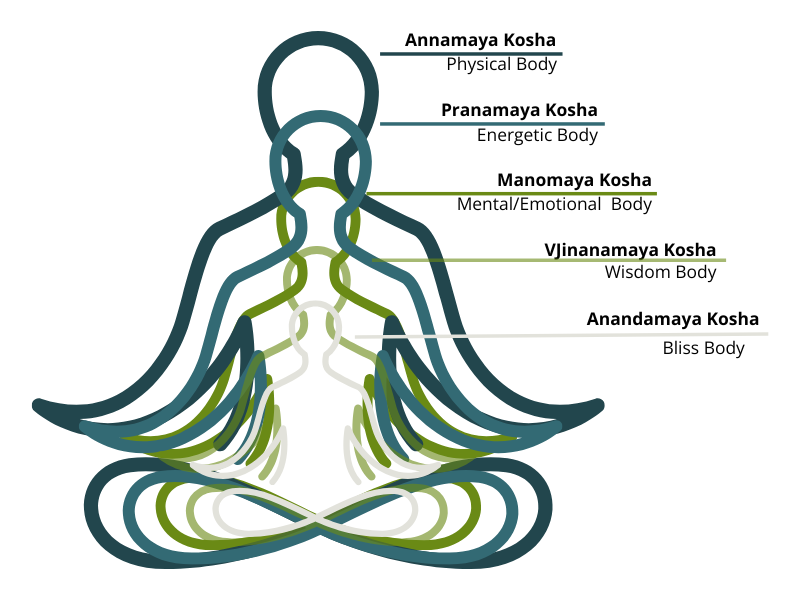
Annamaya Kosha — Physical Layer
The physical layer, Annamaya Kosha, relates to the anatomical and physiological aspects of the human body. It encompasses the skin, muscles, bones, nervous system, and all other physical body systems. From an Ayurvedic perspective, the physical body is understood to be composed of the same five elements believed to form all of creation—earth, water, fire, air, and space.
Pranamaya Kosha — Energetic Layer
The energetic layer, Pranamaya Kosha, relates to prana, which is often described as life force energy. While breath is one of the primary ways prana is received, prana is not literally the breath itself. Prana is understood to exist throughout the natural world—in the air, nature, food, and even within our interactions with other living beings. All living creatures are believed to exist within an ongoing exchange of pranic energy.
Within this layer of human experience, systems such as the chakras and vayus are believed to help direct, distribute, and regulate the movement of prana throughout the human system, influencing overall balance and well-being.
Manomaya Kosha — Mental & Emotional Layer
The mental and emotional layer, Manomaya Kosha, relates to the processing of sensory perception, thoughts, and emotions. It is often understood as a bridge between the physical and energetic layers and the deeper layers of wisdom and well-being.
Vijnanamaya Kosha — Wisdom Layer
The wisdom layer, Vijnanamaya Kosha, is associated with discernment, intuition, and inner awareness. This layer moves beyond sensory perception, thoughts, and emotions toward a deeper connection with insight, meaning, and the broader wisdom that may emerge as we learn to witness life experiences with less attachment to fear and control.
Anandamaya Kosha — Bliss Layer
The bliss layer, Anandamaya Kosha, relates to a deeper sense of peace, joy, and wholeness believed to exist at the center of human experience. Unlike happiness that depends on external circumstances, this layer is often described as a more steady and unshakable sense of well-being that can remain present through the natural ups and downs of daily life. Within yogic philosophy, it is considered closely connected to pure consciousness.
As you reflect on these five layers of human experience, where do you currently experience the greatest sense of ease and balance in your life?

It is this framework of the five koshas that informs the intake questionnaire for Whole Health Yoga clients. The intention of the questionnaire is not to determine what is wrong or in need of fixing, but rather to cultivate nonjudgmental awareness of what may be in balance and what may be out of balance within these five layers of human experience.
In this process, the yoga therapist supports through professional guidance, evidence-informed practice, and a collaborative therapeutic relationship. Together, the client and yoga therapist create individualized practices intended to support greater balance, awareness, and overall well-being across the five layers of human experience.
Over time, this process may help cultivate deeper self-awareness, clearer intuition, and a more compassionate understanding of oneself. Within yogic philosophy, living with greater balance across the koshas is believed to support a deeper experience of peace, joy, and wholeness, even amidst the natural fluctuations of daily life.
It is my intention through Whole Health Yoga to support clients in cultivating a life grounded in greater balance, peace, and joy.
About the Author
Wendy Cook is the founder of Whole Health Yoga (WHY), a therapeutic yoga practice that blends the art and philosophy of yoga with evidence-informed approaches to whole-person well-being. With more than two decades of teaching experience, Wendy has worked in behavioral health settings, corporate environments, athletics, and individualized therapeutic care.
Since 2014, she has trained more than 300 yoga teachers through her Yoga Alliance–registered 200-hour teacher training programs. Her current hybrid training model combines virtual learning, individualized mentoring, and an in-person immersion experience in Guadarrama, Spain. Through this work, Wendy continues to cultivate a supportive teacher community grounded in ongoing education, mentorship, and meaningful connection.
Through Whole Health Yoga, Wendy offers 1:1 and small-group therapeutic yoga sessions designed to support individuals in cultivating greater balance, awareness, and overall well-being.
Ready to take your first step toward therapeutic yoga—or teaching?
Explore our 1:1 and small group therapeutic yoga offerings or join our next 200-hour YTT.