
Trauma-Informed Care and the Ethical Practices of Yoga
How the Yamas and Niyamas Support Whole-Person Well-Being

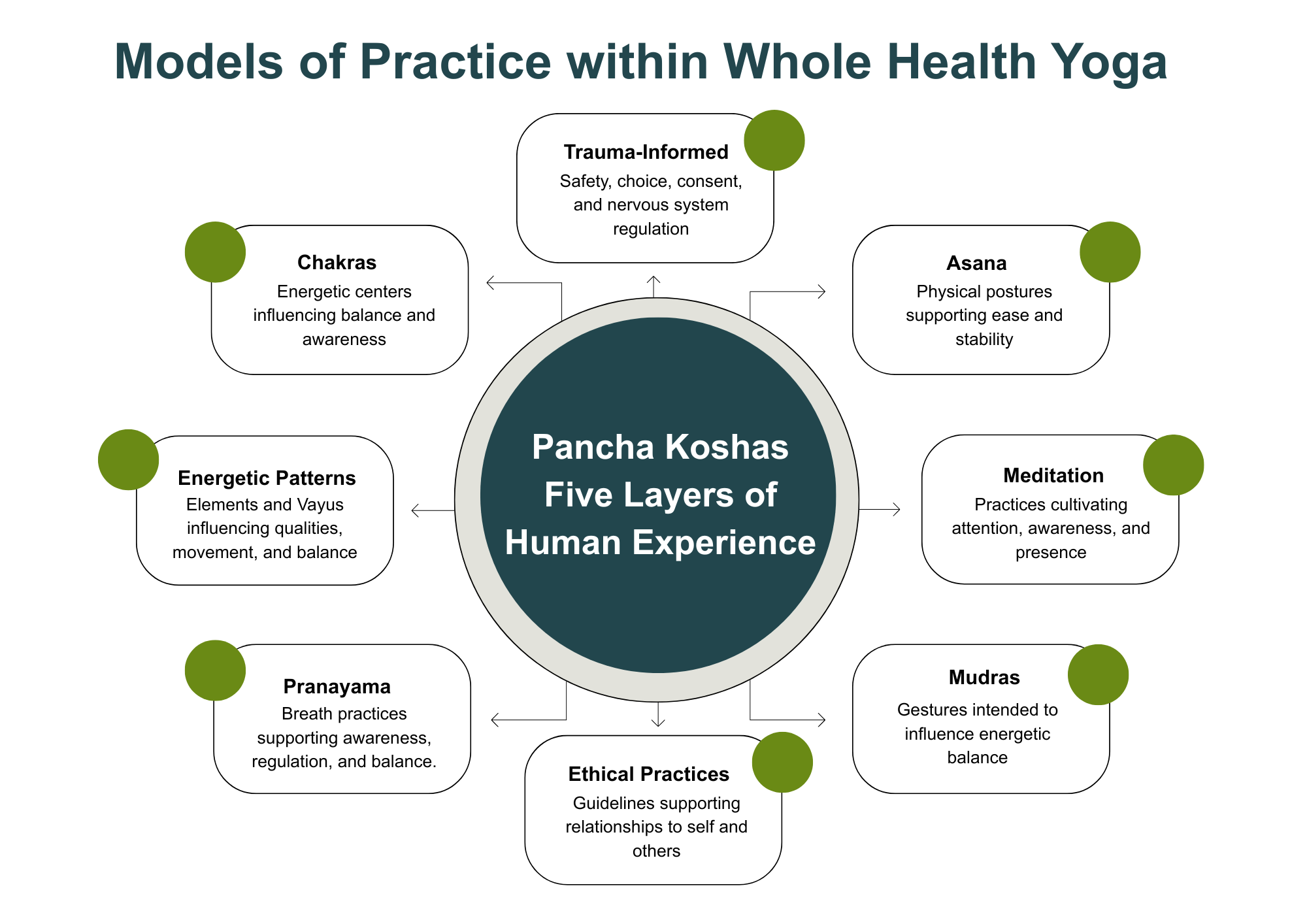
Within Whole Health Yoga, the models of practice are not approached as isolated techniques or rigid layers of hierarchy, but rather as interconnected and evolving approaches that support whole-person well-being. Trauma-informed principles such as safety, choice, consent, communication, and nervous system awareness create the relational foundation through which all other practices are offered within the therapeutic relationship. From this foundation, the ethical practices of yoga provide guiding principles for how the models are embodied within daily life, relationships, and therapeutic practice.
If you are new to therapeutic yoga, you may find it helpful to begin with Understanding Yoga Therapy, which introduces the individualized and whole-person approach that guides the work at Whole Health Yoga.
The Yamas and Niyamas
The ethical practices of yoga are traditionally described through the Yamas and Niyamas, ten principles outlined within the Yoga Sutras that offer guidance for how we relate to ourselves, others, and the world around us. The five Yamas—ahimsa (nonviolence), satya (truthfulness), asteya (non-stealing), brahmacharya (wise use of energy), and aparigraha (non-attachment)—and the five Niyamas—saucha (purity), santosha (contentment), tapas (discipline), svadhyaya (self-study), and Ishvara pranidhana (surrender to something greater than oneself)—together encourage greater awareness of the ways our thoughts, words, actions, habits, and relationships influence overall well-being.

The Yamas and Niyamas offer guidance for cultivating greater balance, awareness, and well-being throughout daily life.
Throughout the history of yoga, these principles have often been taught as ethical behaviors or actions to cultivate and avoid. However, many contemporary yoga teachers, therapists, and scholars increasingly view them as practices that can be embodied across the many dimensions of human experience, influencing not only behavior, but also relationships, patterns of thinking, emotional responses, and overall well-being.
Ethical Practices as a Model of Practice
Within Whole Health Yoga, the ethical practices are not viewed as rules to follow or ideals to achieve. Rather, they are approached as ongoing practices that may influence the way individuals relate to themselves, others, and the world around them. Similar to the other models of practice, the ethical practices invite greater awareness, reflection, and intentional action within daily life.
In therapeutic yoga, the ethical practices may influence the way a client approaches self-care, communication, boundaries, relationships, habits, personal values, and overall well-being. While a yoga therapist does not prescribe ethical beliefs or behaviors, these principles may offer a supportive lens through which individuals explore patterns that support or challenge their health and well-being.

The ethical practices are not viewed as rules to follow or ideals to achieve, but as ongoing practices that may influence the way we relate to ourselves, others, and the world around us.
Nonviolence as the Ethical Thread
Among these ethical practices, ahimsa, or nonviolence, remains essential to the way all other yogic practices and models of care are experienced, integrated, and interconnected. Deeply aligned with trauma-informed principles, ahimsa becomes the ethical thread that connects traditional yogic practices with modern trauma-informed care through the ongoing cultivation of safety, awareness, compassion, respect for boundaries, and reduced harm toward oneself and others.
If the Pancha Koshas describe the layers of human experience, then ahimsa may be understood as an ethical practice that can be embodied across all of those layers. Nonviolence is not merely something we do; it is also something we cultivate in our relationship with our body, energy, thoughts, emotions, relationships, and deeper sense of self. Through this broader understanding, ahimsa extends beyond individual actions and becomes an ethical orientation that permeates every layer of human experience.
From this grounded approach, the remaining models of practice—including breath, movement, meditation, energetic practices, and self-awareness practices—are offered as complementary approaches that may support greater balance, regulation, and overall well-being across the many layers of human experience.
Bringing the Ethical Practices Together
Together, the Yamas and Niyamas offer a model of practice that encourages greater awareness of how thoughts, words, actions, habits, and relationships influence overall well-being. When approached through the lens of trauma-informed care, these ethical practices can support a more compassionate, intentional, and whole-person approach to health.
Future writings will continue exploring each of the ethical practices more deeply and discuss the ways they may support therapeutic yoga, personal growth, relationships, and daily life.
Continue Exploring These Concepts
The ethical practices discussed in this article originate from the Yoga Sutras, one of the foundational texts of classical yoga philosophy. Readers interested in exploring these teachings more deeply may find the following resources helpful:
Swami Satchidananda.The Yoga Sutras of Patanjali. A widely respected translation and commentary on the Yoga Sutras, including the Yamas and Niyamas.
Deborah Adele.The Yamas & Niyamas: Exploring Yoga's Ethical Practice. An accessible and contemporary exploration of the ethical principles of yoga and their relevance within modern life.
David Emerson and Jenn Turner. Founder of Trauma Sensitive Yoga and a leading voice in the integration of trauma-informed principles within yoga practice and care.
Catherine Cook-Cottone, PhD, C-IAYT. Researcher, author, and yoga therapist whose work explores embodied self-regulation, mindfulness, and whole-person well-being through the integration of psychology and yoga.
The perspectives shared throughout this article reflect the Whole Health Yoga approach, which has been influenced by traditional yoga philosophy, trauma-informed care, ongoing professional study, and years of experience teaching therapeutic yoga within behavioral health and community settings.
About the Author
Wendy Cook is the founder of Whole Health Yoga (WHY), a therapeutic yoga practice that blends the art and philosophy of yoga with evidence-informed approaches to whole-person well-being. With more than two decades of teaching experience, Wendy has worked in behavioral health settings, corporate environments, athletics, and individualized therapeutic care.
Since 2014, she has trained more than 300 yoga teachers through her Yoga Alliance–registered 200-hour teacher training programs. Her current hybrid training model combines virtual learning, individualized mentoring, and an in-person immersion experience in Guadarrama, Spain. Through this work, Wendy continues to cultivate a supportive teacher community grounded in ongoing education, mentorship, and meaningful connection.
Through Whole Health Yoga, Wendy offers 1:1 and small-group therapeutic yoga sessions designed to support individuals in cultivating greater balance, awareness, and overall well-being.
Ready to take your first step toward therapeutic yoga—or teaching?
Explore our 1:1 and small group therapeutic yoga offerings or join our next 200-hour YTT.