
Understanding Yoga Therapy: A Practice Grounded in Listening, Not Fixing
What is yoga therapy, and how does it support whole-person health through an individualized, therapeutic approach?
Many people come to yoga believing they need to be fixed. Therapeutic yoga begins from a different perspective.
Yoga therapy recognizes that the body and mind already hold intuitive knowledge for health. In my work, I’ve witnessed meaningful shifts in health through this change in perspective across very different environments—behavioral health facilities, corporate settings, athletics, and sessions with individual clients.
No matter the diagnosis or imbalance, the starting point remains the same.
You are not some “thing” to be fixed. You are someone to be heard, to experience connection, and to feel whole again.
And from this understanding, a more optimal state of health becomes possible.

Understanding Yoga
To better understand yoga therapy, it is helpful to begin with a general understanding of yoga. The most familiar expressions of yoga in modern society are those practiced in studios, gyms, community classes, and online platforms. Within these environments, students often engage in physical postures, seated meditation, breath regulation coordinated with movement, anjali mudra (prayer hands), and practices that support self-compassion.
These commonly taught elements are connected to the Eight Limbs of Yoga described in The Yoga Sutras of Patanjali. While these practices are widely recognized today, they represent only part of a much broader system. Yoga also includes many additional practices that support the physical body, as well as the mental, emotional, and spiritual dimensions of human experience.
Modern yoga is rooted in an ancient tradition that was passed down orally from teacher to student. Its exact origins are not known, though scholars such as Dr. David Frawley trace its beginnings to the Vedic period—long before the classical era in which The Yoga Sutras were compiled.
It is estimated that Patanjali compiled The Yoga Sutras around the 2nd century BCE, organizing existing teachings rather than creating them independently. This text remains a foundational reference for understanding the Eight Limbs of Yoga (Ashtanga), which continue to influence both traditional and modern practices.
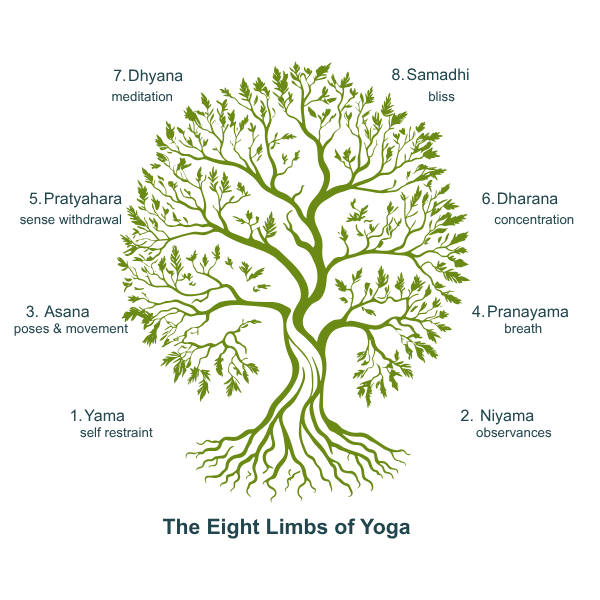
It is within the broader tradition of yoga, including the Eight Limbs, that modern Hatha yoga practices are informed. What we now call Hatha yoga developed later (around the 9th–15th century) through texts such as the Hatha Yoga Pradipika, with a greater emphasis on the body, breath, and subtle energetic practices.
Teachers such as B. K. S. Iyengar (1918–2014), K. Pattabhi Jois (1915–2009), Indra Devi (1899–2002), and T. K. V. Desikachar (1938–2016) emphasized, taught, and adapted yoga to meet modern lifestyles and evolving health needs. This process of adaptation continues in the 21st century, as yoga evolves alongside contemporary life—integrating classical foundations with modern understanding and application.
Within this ongoing evolution, yoga therapy represents both a refinement and a return—integrating scientific and evidence-based understanding while reestablishing the individualized, teacher-to-student relationship at the heart of traditional practice.
What is Yoga Therapy?
Yoga therapy is a growing profession. The International Association of Yoga Therapists (IAYT) is the globally recognized professional organization for yoga therapists, with a mission to advance yoga therapy as a recognized health profession.
IAYT defines yoga therapy as the process of empowering individuals to progress toward improved health and well-being through the application of the teachings and practices of yoga.
Throughout my studies in yoga therapy certification, my peers and I were asked to define yoga therapy multiple times. I found that my own understanding continued to evolve as we deepened our study of the methodology and framework of the Kripalu School of Integrative Yoga Therapy.
My current definition of yoga therapy is a therapeutic approach that identifies and integrates best yoga practices to support balance across the five layers of the human system, fostering optimal physical, emotional, mental, and spiritual well-being.
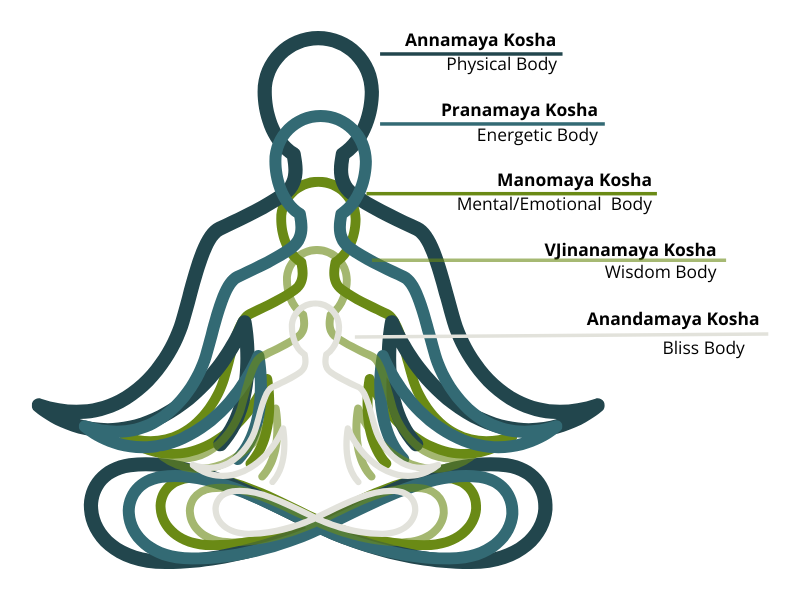
Pancha Kosha System: 5 layers of the human system
Yoga therapy differs from general yoga classes in that it is designed around the individual—whether in one-to-one sessions or thoughtfully structured small groups—adapting the practice to specific needs rather than asking the individual to conform to a pre-designed class structure.
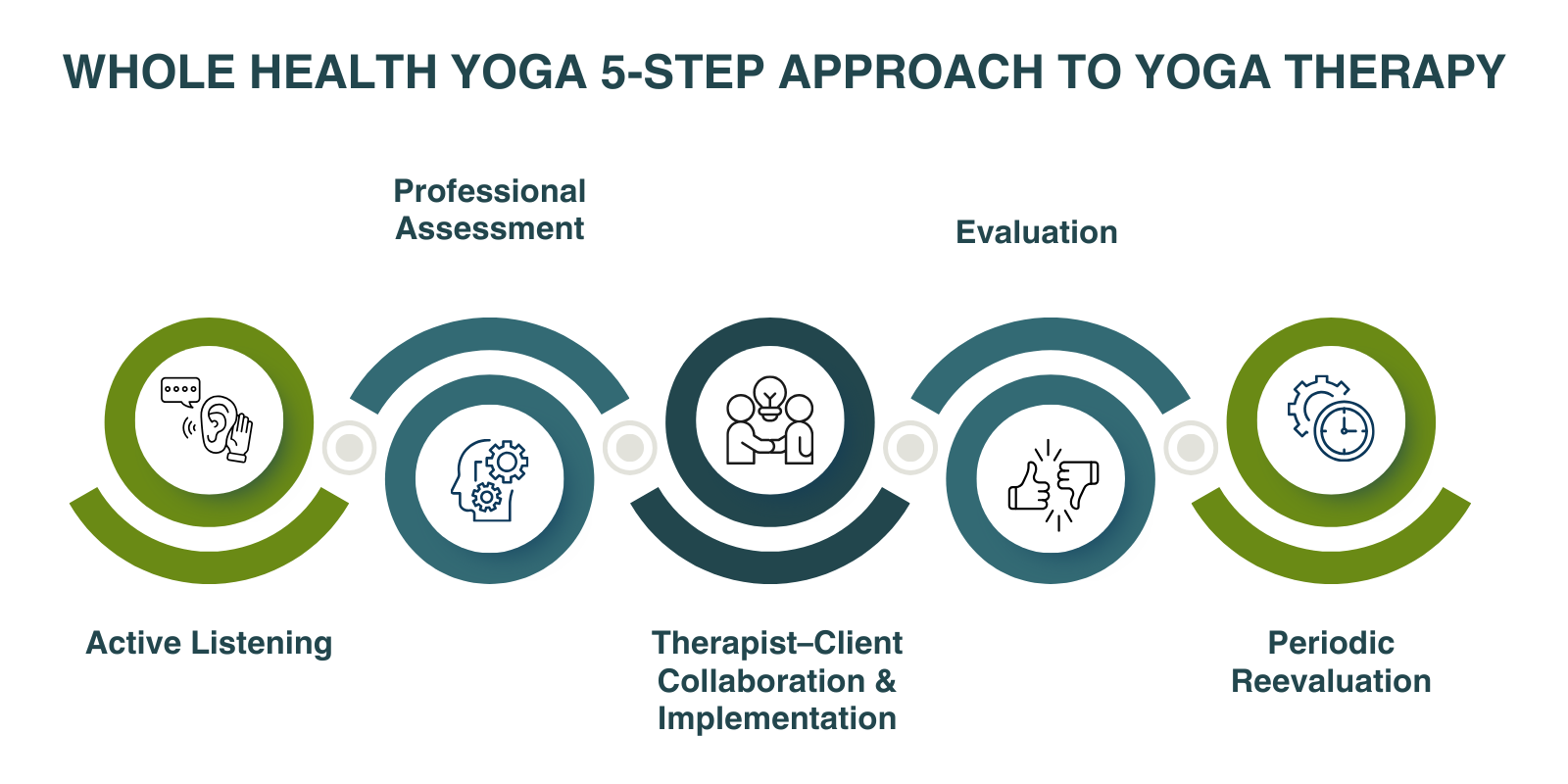
Whole Health Yoga 5-Step Approach to Yoga Therapy
The Whole Health Yoga approach to yoga therapy is grounded in a structured yet flexible, evidence-informed process—drawing on scientific research to guide best practices—that centers the individual. These five steps outline how each client’s experience is received, understood, and supported over time.
Active Listening
Professional Assessment
Therapist–Client Collaboration & Implementation
Evaluation
Periodic Reevaluation
Active Listening: listen | confirm | clarify
Information specific to the client is gathered through an intake form and explored more fully during an intake session. This session provides space for the client to share their experience while I listen attentively, confirm my understanding by paraphrasing key details, and clarify through thoughtful questions.
Each session that follows begins with an opening segment that continues this process—inviting the client to share how they are engaging with their practices and any new awareness that may have emerged. This ongoing approach of listening, confirming, and clarifying helps ensure the work remains responsive to the client’s evolving needs.
2. Professional Assessment
The professional assessment builds on the information gathered through active listening. This step is intended to develop a comprehensive understanding of the client’s current state of health and well-being.
Within this process, I identify areas of balance and imbalance across the five layers of the human system (kosha model). I also review any allopathic diagnoses shared by the client to better understand which body systems may be impacted.
Academic research is then assimilated to inform best practices, integrating current understanding of both yoga and the client’s condition (for example, yoga and menopause). This information guides the development of an initial yoga plan, which is introduced and refined in collaboration with the client.
3. Therapist–Client Collaboration & Implementation
Based on the assessment, a range of appropriate practices is introduced and explained. The client is invited to select the practices they feel most comfortable with and most able to implement in their daily life.
Time is dedicated to guiding the client through the selected practices—providing education while allowing space for direct experience, feedback, and adjustment. This collaborative process ensures the practice is both accessible and meaningful, supporting consistency and long-term integration.
4. Evaluation
Each session begins with an open-ended question that invites the client to share their experience with the practices, as well as any new awareness related to their health and daily life.
This process allows for ongoing evaluation of the practices and their impact, ensuring the work remains aligned with the client’s needs and responsive to what is emerging over time. Based on this feedback, practices can be adjusted in the moment—refining or introducing alternatives as needed to better support the client’s experience.
5. Periodic Reevaluation
This step differs from the ongoing evaluation within each session. It offers a broader review of the client’s overall well-being, similar in scope to the original intake process.
Periodic reevaluation typically occurs every 8–12 weeks and provides an opportunity to reflect on progress over time, reassess patterns of balance and imbalance, and adjust the direction of the therapeutic process as needed.

Rooted in the broader tradition of yoga, informed by evidence-based understanding, and guided through an individualized, relational process, yoga therapy offers a way to support whole-person health. The Whole Health Yoga approach reflects this integration—meeting each client where they are and supporting meaningful change over time.
About the Author
Wendy Cook is the founder of Whole Health Yoga (WHY), a therapeutic yoga practice that blends the art and philosophy of yoga with evidence-informed approaches to whole-person well-being. With more than two decades of teaching experience, Wendy has worked in behavioral health settings, corporate environments, athletics, and individualized therapeutic care.
Since 2014, she has trained more than 300 yoga teachers through her Yoga Alliance–registered 200-hour teacher training programs. Her current hybrid training model combines virtual learning, individualized mentoring, and an in-person immersion experience in Guadarrama, Spain. Through this work, Wendy continues to cultivate a supportive teacher community grounded in ongoing education, mentorship, and meaningful connection.
Through Whole Health Yoga, Wendy offers 1:1 and small-group therapeutic yoga sessions designed to support individuals in cultivating greater balance, awareness, and overall well-being.
Ready to take your first step toward therapeutic yoga—or teaching?
Explore our 1:1 and small group therapeutic yoga offerings or join our next 200-hour YTT.